Peace and Rivalry in the South Caucasus: From Zangezur
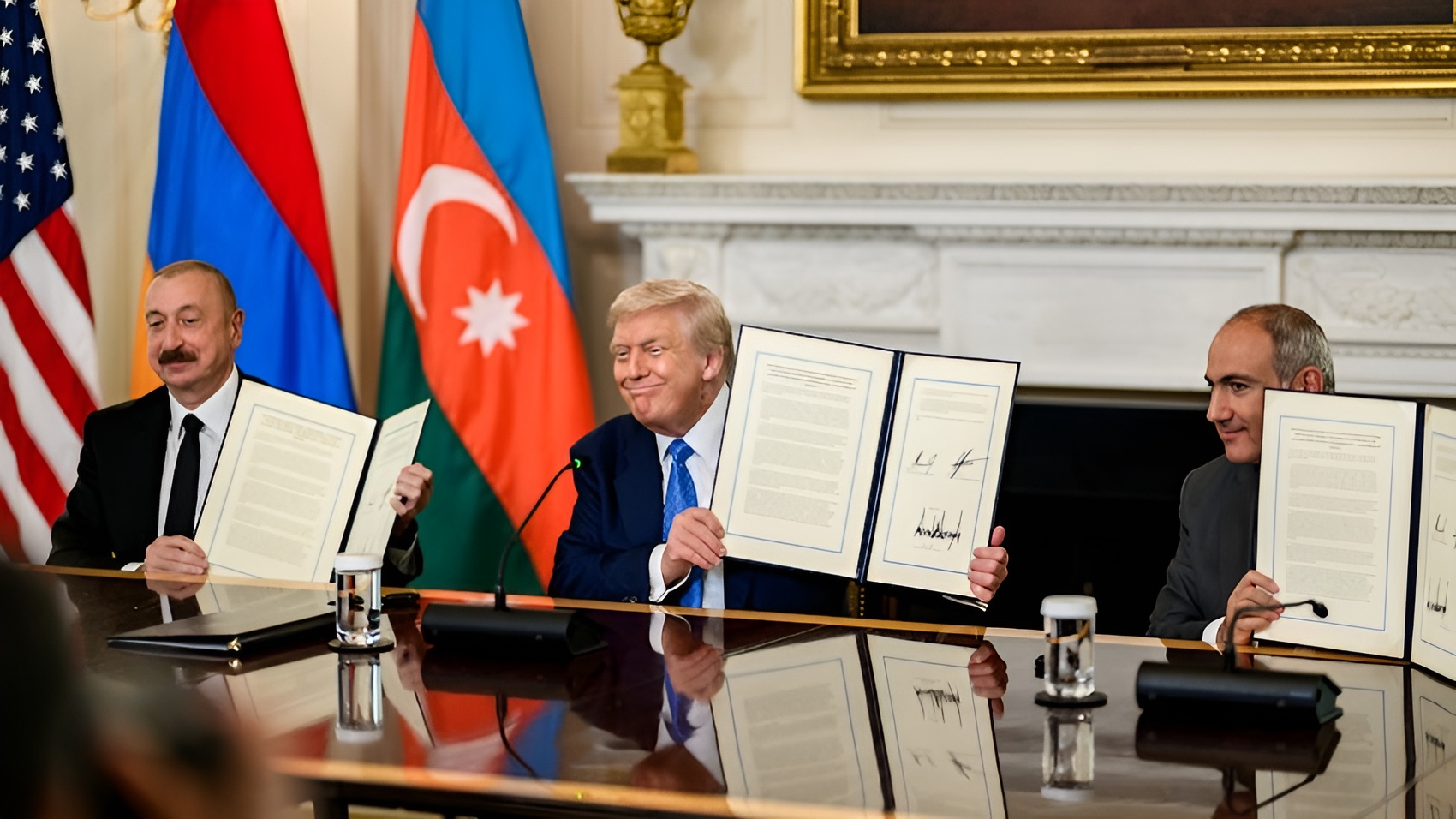
Washington witnessed a critical development for the South Caucasus on August 8, 2025. Hosted by U.S. President Donald Trump, Azerbaijani President Ilham Aliyev and Armenian Prime Minister Nikol Pashinyan signed an agreement that ended the hostility persisting since the 1990s. The most important part of the deal was the creation of a corridor connecting Azerbaijan to Nakhchivan, to be operated under U.S. leadership. While some welcomed this development, others emerged as the clear losers of the process. It was revealed that the naming of the route as the Trump Route for International Peace and Prosperity (TRIPP) originated from the Armenian side, who first proposed it. Aliyev declared that the agreement marked “permanent, eternal peace in the Caucasus.” He was not wrong: frozen conflicts and unresolved disputes such as Karabakh, South Ossetia and Abkhazia in the Caucasus, and Gagauzia, Transnistria, and Donbass in the northern Black Sea region, had long been the Soviet Union’s legacy to these countries. Now, the resolution of one of these conflicts constituted a crucial step in putting an end to this negative inheritance.
The Story So Far…
Reaching this point was by no means easy. The Caucasus had always been the borderland of empires, but in recent centuries it became the arena for power struggles among the Ottoman, Russian, Persian, and British empires. Thus, the fate of the region was decided in distant capitals and it was constantly used as a piece on the geopolitical chessboard. Russia’s presence in the region began with the Treaty of Georgievsk signed with Georgia in 1783, and from that day onward, regional problems only escalated. In this sense, Russia’s frequent use of “shared history” rhetoric to justify its regional hegemony carries a degree of truth.
The Karabakh issue between the two countries began even before the dissolution of the Soviet Union, in 1988, when Armenians in the region held an independence referendum. The clashes that erupted during this period gradually escalated into a full-scale war that lasted until 1994. After the collapse of the USSR, both sides actively sought Western support. Yet, as early as 1992, Azerbaijan began to fall behind in this competition when the U.S. Congress, under the influence of Armenian lobbying, passed Section 907 of the Freedom Support Act, which blocked direct U.S. aid to Azerbaijan. In 1995, Armenia incorporated the issue of unification with Karabakh into its constitution, and despite carrying out an unrecognized occupation, managed to sign a Partnership and Cooperation Agreement with the EU in 1996. Around the same time, it was also included in the EU’s TACIS aid and grant program. The 2000s further witnessed the strengthening of Armenia-West relations: in 2004 it benefited from the European Neighbourhood Policy, in 2009 it joined the Eastern Partnership initiative, and in 2017 the EU-Armenia Comprehensive and Enhanced Partnership Agreement was approved. Perhaps for this reason, Pashinyan came to power in 2018 through the Velvet Revolution, though he made no concessions regarding Karabakh.
Meanwhile, Azerbaijan played its cards with Israel and Turkey. While gradually spending its accumulated wealth from energy resources on military modernization, it also managed—similar to Turkey’s efforts on the so-called Armenian genocide—to gain the support of the Jewish lobby in keeping the Karabakh issue on the international agenda. Karabakh became one of the most defining elements of Azerbaijan’s policy. Although Baku didn’t oppose openly to Russia who maintained its military presence and influence in the region, nationalist sentiments within Azerbaijan never subsided.
Sometimes war can bring a swift solution, and the 44-Day War, or the Second Karabakh War of 2020, instantly unlocked this frozen conflict in the Caucasus. In less than two months, Azerbaijani forces crushed the Armenian resistance in Karabakh. Sitting at the same table in Moscow with Russian leader Vladimir Putin, Aliyev and Pashinyan signed a ceasefire agreement. Thirty years later, the Karabakh issue, once again on the world’s agenda, now entered a phase of resolution. Among Azerbaijan’s demands from Armenia during this process, one crucial element stood out: the creation of the Zangezur Corridor linking Azerbaijan to Nakhchivan. Yet, negotiations and disputes over this issue dragged on until 2025.
That is, until August 8…
Key Elements of the Agreement
• The corridor to be established between Azerbaijan and Nakhchivan will be developed by a U.S. consortium and will be entirely economic in nature, incorporating a comprehensive infrastructure of railways, highways, oil and natural gas pipelines, and fiber optic lines. Armenia granted the United States a 99-year concession for the territory through which the corridor will pass.
• By signing the first stage of the peace agreement, the parties officially ended the violence. While improving mutual communication, they also committed to concluding bilateral agreements with each other and with the United States in the fields of energy, technology, border security, and trade.
• The parties agreed to withdraw from the OSCE Minsk Group and pledged to dissolve the group.
• The U.S. embargo on Azerbaijan was lifted.
Regional and Global Implications
Perhaps the most significant impact of the Second Karabakh War was that both sides came to realize that Russia’s presence in the region neither ensured peace nor contributed to conflict resolution. Only a few years earlier, both of these countries were still regarded as Russia’s backyard, and the idea of breaking Moscow’s influence over them seemed highly unlikely. Today, however, the parties were able to reach a Memorandum of Understanding and agree to establish a strategic working group. Moreover, it was stated that the primary function of this group would be to work on strengthening relations and cooperation with the United States.
For Azerbaijan, these developments did not emerge suddenly. Liberal circles and nationalist groups in the country had long desired to break free from Russia’s shadow and move closer to the West. Over time, this aspiration amplified pro-Western rhetoric in Azerbaijan while sharpening anti-Russian attitudes.
Although such rhetoric had existed for years, real tensions in Azerbaijan-Russia relations began on December 25, 2024. On that date, a plane departing from Azerbaijan and descending to land in Grozny, Russia, was shot down by Russian air defense systems. The airplane was redirected to Aktau, Kazakhstan, but due to the damage it sustained, it crashed during landing. Of the 67 people on board, including crew, 38 lost their lives. Subsequently, in February 2025, the Russian House in Baku was shut down on charges of spying for Moscow and attempting to influence Azerbaijan’s social and political developments. Following this, Russian security forces conducted an operation against the Azerbaijani community in the Yekaterinburg region of Russia, during which two prominent community leaders were killed. Both sides blamed one another, while Russian businessmen and journalists were detained in Azerbaijan. Finally, during the Washington summit of leaders, Russia bombed one of SOCAR’s facilities located in Ukraine.
Meanwhile, Azerbaijan has finally achieved the goal it had long sought: an uninterrupted land connection to Nakhchivan. Its main demand regarding this connection was to avoid being subject to Armenian border controls and customs. With the corridor placed under U.S. supervision, this issue has been resolved. Indeed, Azerbaijan already aims to complete the construction of railway lines in the Karabakh territories it liberated from occupation by the end of this year, while also planning to upgrade the railway infrastructure in Nakhchivan.
Another gain for Azerbaijan was Trump’s decision to lift Section 907 of the Freedom Support Act, which had been in force since 1992. Considering that Baku now sees Yerevan not as an enemy state but as a potential partner, the embargo had already lost its significance. With its removal, Azerbaijan can now directly seek to procure American defense industry products.
For Armenia, however, the situation is more complicated. In the aftermath of the Karabakh defeat, Prime Minister Pashinyan has been placed squarely in the crosshairs of Armenian nationalists and pro-Russian factions. Already in 2020, shortly after the defeat, he narrowly survived both a coup attempt and an assassination plot. Over the past five years, however, statements from Yerevan increasingly signaled a shift away from Russia’s orbit and a turn toward the West.
Recent months have witnessed an intensification of Armenia’s internal reckoning. Yerevan launched operations against both the Armenian Apostolic Church and the Dashnaktsutyun Party, accusing them of plotting a coup. While the reality of such allegations remains questionable, these two institutions have consistently used their influence—both over Armenian nationalists within the country and over the diaspora abroad—to keep the Karabakh issue alive through the lens of “Greater Armenia” claims. In response, Pashinyan’s camp has emphasized concrete realities, arguing that Armenia must free itself from the historical burden on which the Greater Armenia thesis rests. Based on this reasoning, Pashinyan agreed in Washington to remove the reference to Nagorno-Karabakh from Armenia’s 1995 constitution.
Armenia’s greatest expectation is the opening of its border with Turkey. Indeed, as early as 2010, Turkey had offered to open the border in exchange for Armenia’s withdrawal from Karabakh. Moreover, Yerevan’s Crossroads of Peace project, announced in 2023, envisioned connecting trade routes from neighboring countries. Yet, this project failed to materialize since both the Turkish and Azerbaijani borders remained closed. Now, with the opening of borders made possible through the Trump Corridor, Armenia may finally escape the conditions of economic blockade and further reduce its dependence on Russia.
Nevertheless, the status of the corridor is likely to spark debates within Armenian public opinion. Pashinyan had repeatedly promised that no foreign entities would operate along Armenian borders or within Armenian territory. Yet, leasing the region to the United States for 99 years clearly marks a step back from that pledge. On the other hand, the U.S. administration has emphasized that the land will ultimately remain under Armenian sovereignty. In addition, if Armenian companies are included in the international consortium to operate in the corridor and employ local workers, this infusion could provide a much-needed boost to Armenia’s economy and help mitigate domestic backlash. Still, it should be noted that opposition to the agreement has already emerged, particularly from the Armenian National Committee of America (ANCA), a major diaspora organization in the United States.
It would not be an exaggeration to claim that Iran is following these developments through gritted teeth. While Tehran’s official response described the agreement as “an important step for lasting regional peace,” the statement went on to warn that the intervention of foreign powers in the region could pose a threat to regional security. Iran also declared its readiness to work with both countries through bilateral channels.
Naturally, the sincerity of Iran’s statement will be questioned. For the past five years, Tehran has issued veiled threats of military intervention to block the Zangezur Corridor project, making it unlikely that it now welcomes the agreement with genuine satisfaction. The corridor represents a significant defeat for Iran, as it cuts off the Iran-Armenia route—its only land connection to Western markets—and erects a barrier to Tehran’s plans in the South Caucasus. Furthermore, the corridor will contribute to the West’s broader efforts to economically and politically encircle Iran. In this sense, Iranian media outlets have already argued that the corridor will not merely function as an economic route but could potentially be used for military purposes in the future. Such warnings are not confined to the Iranian press alone. Voices within Iran’s military establishment have also claimed that Trump deceived both Aliyev and Pashinyan, and that Russia, Iran, China, and India will eventually move to counter the corridor.
Within the U.S.-Russia-China triangle, the Trump Corridor represents a new chess move. The term “Great Game”—once used in the 19th century to describe the geopolitical rivalry between the British and Russian Empires in the Caucasus and Turkestan—can now just as easily be applied to these three powers in the same region. Yet unlike in the past, when Russia was the eventual winner of that game, today it is increasingly becoming the loser. Bogged down for years in the quagmire of Ukraine, unable to achieve its objectives, and with an expanded border with NATO, Russia now faces the closure of its South Caucasus gateway, on top of losing its foothold in the Mediterranean following Assad’s downfall. Georgia remains the only government in the region aligned with Moscow, but even there, Western-leaning popular sentiment raises doubts about how sustainable that alignment truly is.
The roots of this defeat also lie in Russia’s own approach to the region. Rather than investing in genuine public diplomacy and economic development programs, Moscow relied on pro-Russian politicians and oligarchs. Instead of mediating disputes and taking on the role of arbiter, it preferred to “freeze” existing crises. It failed to foresee that unresolved problems would accumulate over time, pushing regional states away from its orbit. As a result, in countries once regarded as Russia’s backyard, the rising voices of opposition to Moscow can no longer be dismissed as isolated dissent.
With this chess move, the U.S. has not only captured a major piece from both Russia and Iran but has also forced China to lose a pawn. For China, the Zangezur route—central to its Middle Corridor Initiative—will now effectively fall under American control. However, Washington’s greatest gain lies in securing direct access to the energy resources of the Caspian and Turkestan regions. Since pipelines from this corridor will pass through TRIPP, the U.S. will not only sideline Russia and China but also place its stamp on alternative energy supplies sought by the European Union eager for strategic autonomy from Washington. In short, with a single move, Trump has managed to inflict significant losses on four major powers.
Turkey is among the actors directly affected by the corridor issue, which stands as one of its shadow partner. On the road to the Second Karabakh War, during the war, and in its aftermath, Turkey did not hesitate to provide various forms of support to Azerbaijan, and since 2020 it has pursued an insistent policy on the Zangezur Corridor. For Turkey, the most critical point was the possibility of establishing a direct connection to Turkistan through the Zangezur Corridor. By integrating into these transit routes, Turkey could secure significant revenues both in terms of exports and transit fees. With TRIPP, it would not be wrong to say that Turkey has essentially achieved this goal, though it seems Ankara itself had not fully anticipated this outcome. Indeed, even if Turkey did indeed reach its aspiration, it came at a cost: the opening of the corridor and the withdrawal of the two actors blocking it brought with it the obligation to operate under the American umbrella.
Conclusion: The Hazy Atmosphere of the Trump Corridor
It is worth noting that everything still remains highly uncertain. Among the provisions signed publicly, there are many conditions that have not yet been clarified, and it is unclear how other regional agreements will be affected if TRIPP comes into effect.
At the forefront of these issues lies the common customs regime established by the Eurasian Economic Union (EAEU). Since Armenia is a member, products passing through member states are required to comply with EAEU regulations. Therefore, every product passing through this corridor, which falls under Armenia’s sovereignty, will technically have to conform to EAEU standards. This may limit TRIPP’s effectiveness.
Uncertainty also continues regarding the corridor’s status. It is difficult to predict what problems this ambiguity might create in the future, but the question of who will provide security for the corridor is the most crucial factor in this uncertainty. If the United States assumes responsibility, it would mean the deployment of American troops in the region—something that could justify Iran’s fears.
With Moscow no longer at the table, Russia may instead, possibly together with Iran, seek to assert itself through different means in the region. Since the start of the Ukraine War, although Russia has accepted defeat on some fronts, it has generally responded possible threats with force. This could potentially lead to new proxy wars and even the emergence of terrorist organizations in the region—developments we may not currently expect.
For Turkey, Caucasus policy will now become even more complicated, as yet another superpower has entered the regional balance, requiring careful evaluation and inclusion in Ankara’s balancing strategy. Armenia’s move has made policymaking even more difficult for Turkey. Moreover, the fact that all transport between Turkey and Turkistan will now take place under American oversight presents a new challenge for Turkey’s pursuit of strategic autonomy.
While it can be said with ease that TRIPP has brought an end to the hostility between Azerbaijan and Armenia, it is already evident that the region will witness new tensions and the emergence of new balances—or imbalances.