Iran Protests and the Regime Dilemma
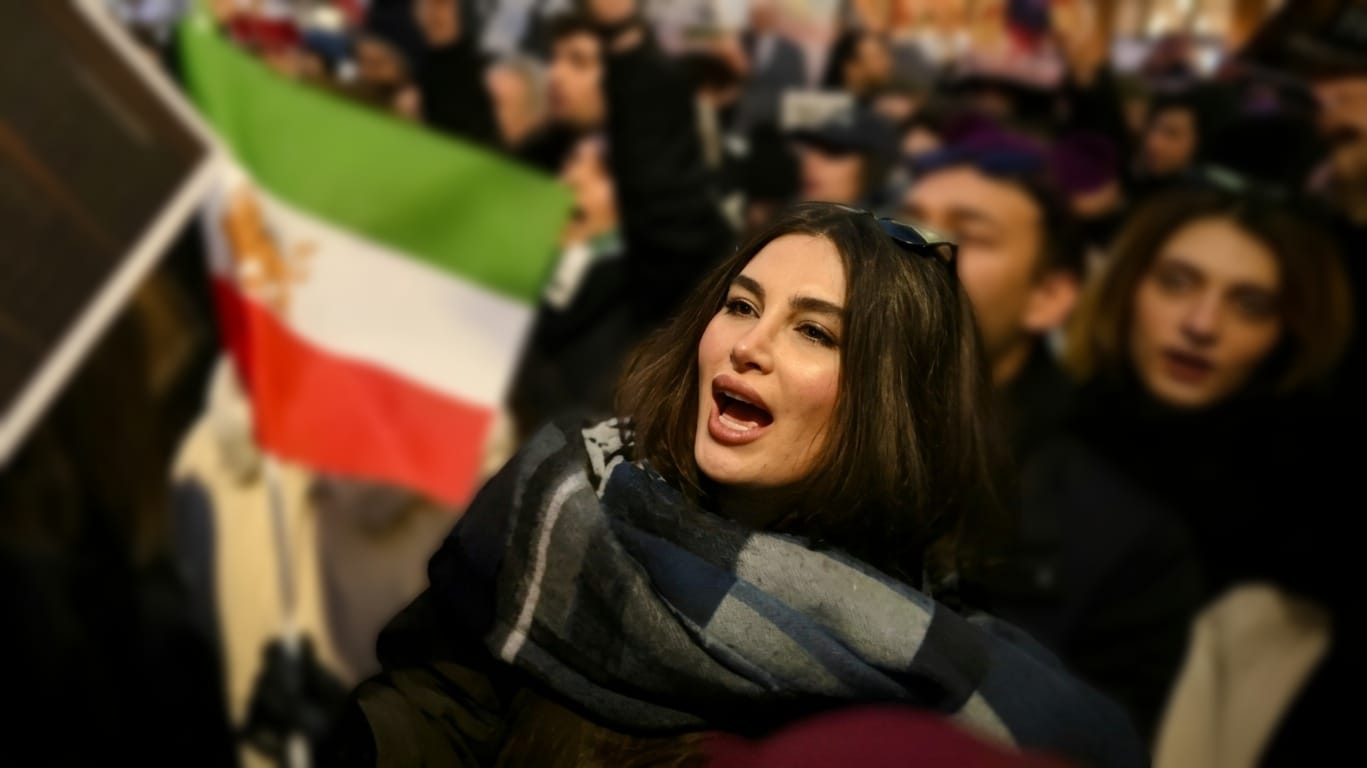
The protests that began on 28 December 2025 in Iran, triggered by the roughly 40 percent depreciation of the rial against the US dollar, have evolved into large-scale demonstrations. As of 13 January 2026, the protests are ongoing, and the regime is trying to suppress the actions with great brutality. However, both the regime and the Iranian opposition find themselves in a deadlock. For example, the regime’s legitimacy in Iran is highly questionable, as participation in the last presidential elections hovered around 40 percent. In major cities like Tehran, this rate appears to be around 33 percent. Nevertheless, it must be noted that for the Iranian people, the election effectively presented no real alternative. This article will examine how a system without alternatives has been constructed in Iran, and how the opposition has likewise been affected by this structure.
From the Land of the Shahs to the Realm of the Mullahs
On 11 February 1979, the Shah’s army units in Iran received instructions, through a declaration of neutrality, to return to their barracks, thereby stepping back in the face of the revolutionaries. The government of Prime Minister Shapour Bakhtiar, appointed by the last Shah, was left powerless and had to leave the country. A provisional government was formed in Iran under the leadership of Ayatollah Khomeini, and the monarchy was abolished by referendum. The new system in Iran was shaped around an institution called the “Velayat-e Faqih” (Guardianship of the Islamic Jurist). This office was situated at the core of a structure in which the state assumed a theocratic character. Although the presidency in Iran held certain powers, it always remained overshadowed by the institution of the Velayat-e Faqih.
After Khomeini’s death in 1989, Seyyed Ali Khamenei was selected by the Assembly of Experts as the holder of the Velayat-e Faqih. With Khamenei’s rise to power, the Islamic Revolutionary Guard Corps (IRGC), which had been established because of the distrust toward the regular Iranian army in 1979, consolidated its position. With the Iran–Iraq War, the IRGC gained further strength, and this power, following Khamenei’s selection as Supreme Leader, became deeply entrenched in the state system. The IRGC became the protective force of the regime and also took part in the economic system. Through economic foundations known in Persian as “bonyads,” the IRGC gained control over the heart of the economy. Thus, while the Iranian army had stayed out of politics during the anti-Shah demonstrations that began in 1978, the new regime drew lessons from this experience and made the security apparatus a partner in its rule. From 1999 until 2009, the Iranian people attempted to change the regime from within. For instance, the student protests that began in Tehran and many other cities in 1999 ended as a result of the state’s harsh stance. It should be noted that there are two main groups within the system in Iran, and these two constitute the pillars of the regime. The first group consists of the establishment loyalists, who include the radicals of the regime. The second group is made up of reformists who advocate change from within the system.
From the second half of the 1990s onwards, with the election of Mohammad Khatami to the presidency, a reformist candidate came to power in Iran. Ideas that the system in Iran could be reformed resurfaced. During Khatami’s tenure, relative reforms helped civil society begin to emerge in Iran. The belief that the regime could be reformed cultivated hope among the Iranian opposition. However, it cannot be said that the IRGC viewed Khatami and his government favorably. In the second round of the 2005 presidential elections, Tehran’s mayor, Mahmoud Ahmadinejad, who adopted a radical and pro-establishment discourse, won the vote. By 2009, Iran held its 10th presidential elections. During the election process, Mahmoud Ahmadinejad represented the establishment camp, while Mir-Hossein Mousavi was the candidate of the reformists. Mousavi had served as Minister of Culture in the 1980s and had withdrawn from active politics towards the end of that decade. In these elections, where voter turnout was around 85 percent, Ahmadinejad won with about 63 percent of the vote. However, due to allegations of electoral fraud, Mousavi’s supporters took to the streets. These protests came to be known as the Green Movement. Yet, due to Mousavi’s hesitant attitude, the Green Movement ended in major disappointment. From this point on, opposition to the regime in Iran began increasingly to move from within the system to outside the country.
A Leaderless Opposition and the Iranian People
After the Green Movement of 2009, the main axis of the opposition increasingly shifted abroad. In particular, opposition television channels such as MANOTO and Iran International, which are watched via satellite in Iran, began to be followed, often by illicit means. On these diaspora-run channels, a nostalgia for the Shah’s era was expressed, and an attempt was made to shape perceptions among the younger generation who had not experienced the 1979 Revolution. In these documentaries, figures from that period appeared on screen, and propaganda for the Shah’s era was made both directly and indirectly. Through such anti-regime broadcasts, efforts were made to influence the Iranian public. These programs, which brought the Shah’s son, Reza Pahlavi, into the foreground, partially succeeded in appealing to an Iranian society burdened by economic sanctions and social unrest.
During the protests of 2019 and 2022, some segments of the Iranian public chanted slogans in favor of the Pahlavi family. In the Mahsa Amini protests of 2022, Iranian women partially championed freedom in dress and appearance. As a result of these events, women were able to walk in the streets of Iran with their heads uncovered. In addition, in Iran’s Baluchistan region, the demonstrations followed a different trajectory and, as can be argued, helped fuel separatist movements in the area.
Another key component of the Iranian diaspora is the People’s Mojahedin of Iran (MEK). The MEK lost the power struggle against Khomeini in 1980–1981 and then supported Iraq, with which Iran was at war. This choice resulted in the Iranian public maintaining a clear distance from this opposition group. The MEK has become almost a taboo subject in Iran. Today, following the US invasion of Iraq, the MEK was removed from Camp Ashraf in Iraq and relocated to Albania. Another important opposition force consists of national groups seeking independence. Following the Treaty of Turkmenchay in 1828, the Aras River became a border between two countries, and Northern Azerbaijan was incorporated into Russia. After the end of the Qajar dynasty, the Pahlavi dynasty came to power and adopted Persian nationalism as its foundation. This emphasis on Persian nationalism persisted in Iran after the 1979 Revolution. South Azerbaijani Turks are still seeking their rights in Iran. By 2025, protests that began due to the high cost of living had increasingly turned into demonstrations calling for the overthrow of the Islamic Republic of Iran.
It must be emphasized that the system in Iran is in a profound deadlock. In particular, the fact that the Velayat-e Faqih holds ultimate authority makes the system highly prone to gridlock. On the other hand, the opposition to the regime is also going through a leaderless process. Reza Pahlavi’s leadership profile is highly contested, and, as he is the only widely known opposition figure among the Iranian public, it will never be possible to know how much genuine support he actually commands within Iran.
Assessment and Conclusion
As of 13 January 2026, protests against the regime in Iran continue. However, it is possible that these actions may fail to transform into a general strike against the regime, and given that the regime’s security apparatus remains intact and unified, the protests may eventually lose momentum. Unless the regime renews itself, it is likely that further protests will occur. The regime in Iran has drawn lessons from the mistakes made by the Shah. In particular, the security apparatus in Iran is directly embedded in politics. In any potential revolution in Iran, those who stand to lose the most will not be the mullahs or the formal state leaders, but rather the Islamic Revolutionary Guard Corps. The unrest that might emerge in Iran could lead to a civil war. In such a scenario, the country that must be most cautious is Turkey. For Turkey, the territorial integrity of Iran should be a fundamental principle. Unrest and a possible civil war in a country of 90 million could prove even bloodier than the Syrian Civil War and potentially more impactful at the regional level. For example, the reluctance of US President Trump to intervene militarily may be seen as an indication of this. It is essential that the Iranian people determine their own future. Apart from Trump’s declaration that “we stand with the Iranian people,” it is possible to say that he remains reluctant to activate a serious plan of action. It is likely that the system in Iran will become even more closed and that these protests will be suppressed in a very bloody manner.