Trump’s New Europe: A Paradigm Shift in Transatlantic Relations
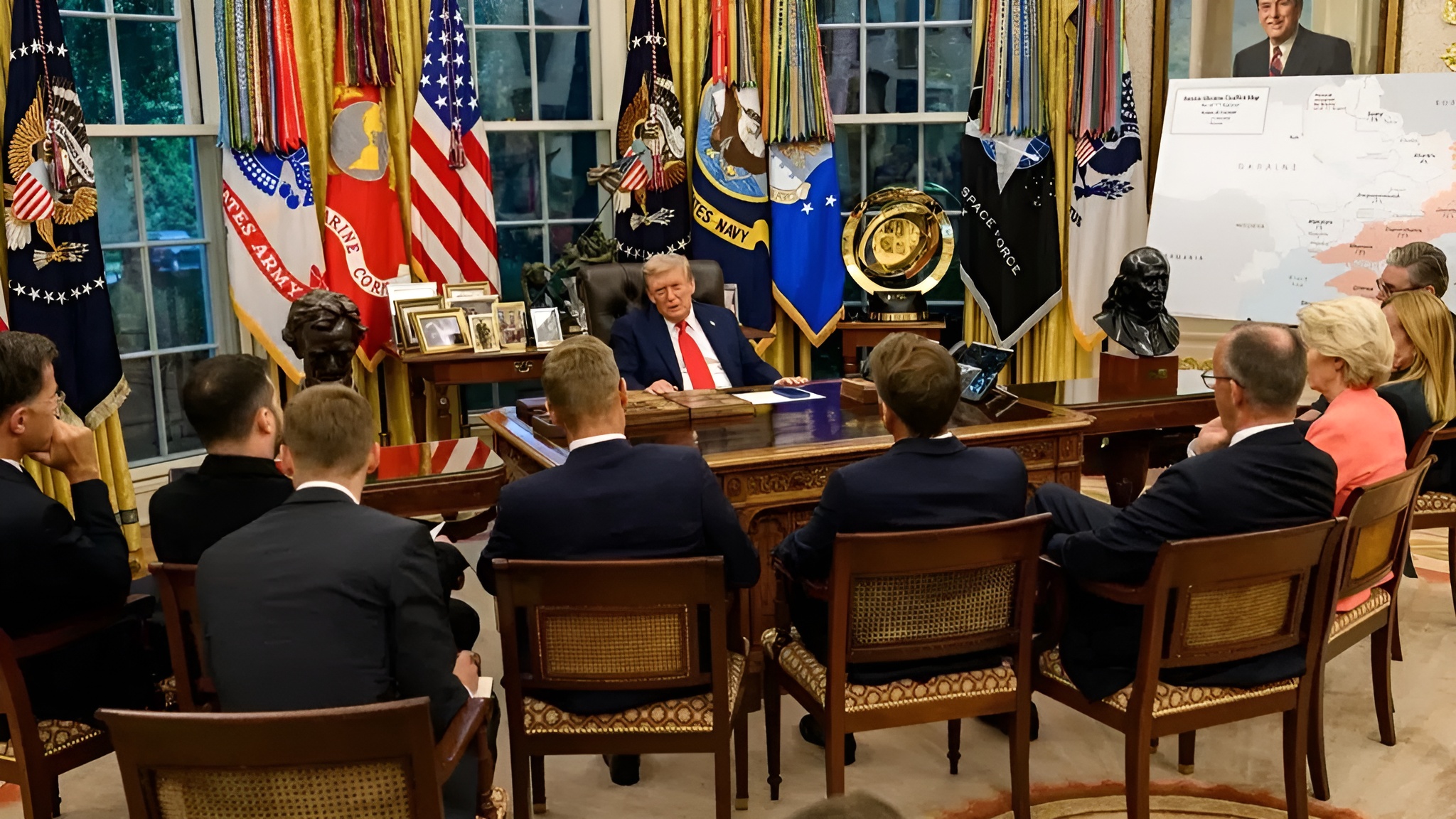
Donald Trump’s return to the presidency of the United States has brought significant changes to global geopolitical balances. Throughout his election campaign, Trump, under the slogan “Make America Great Again,” was initially thought to pursue an isolationist foreign policy and abandon America’s protective stance toward Europe. However, contrary to these expectations, he has taken an active role in European politics, one that diverges from traditional American foreign policy. Rather than aligning with Europe’s traditional political elites, who champion liberal democratic values, Trump has opted to forge close ties with the continent’s new right movements. This shift has led to a radical change in the positioning of these new right movements in international relations.
Europe’s New Right and Trump’s Strategic Approach
In recent times, statements from Trump and his inner circle regarding Romania’s controversial election results, pressures on Germany’s Alternative für Deutschland (AfD) party, and political restrictions imposed on France’s Marine Le Pen indicate that the United States is inclined to actively intervene in Europe’s internal political affairs. These interventions demonstrate that Trump is not merely an isolationist but is instead working to construct a “new Europe” by supporting political actors aligned with his own policies.
A particularly notable point is the potential shift of Europe’s new right movements, previously perceived as pro-Russia and thus labeled as “national security threats” in their respective countries, toward a pro-American stance under Trump’s presidency. This shift could transform these movements from being within Russia’s sphere of influence into allies serving America’s geopolitical interests.
Breaking Away from Russia’s Sphere of Influence
Over the past decade, the growing alignment between Europe’s new right movements and Russia has been viewed by many analysts as part of the Kremlin’s strategy to destabilize Europe and weaken transatlantic relations. Through financial support, media cooperation, and political solidarity, Russia has supported these movements, posing a threat to the integrity of the European Union and NATO.
However, Trump’s approach to European politics has the potential to alter this dynamic. By supporting Europe’s right-wing leaders, Trump aims to bring them under Washington’s influence. This strategy seeks to pull these movements out of Russia’s orbit and reposition them to serve America’s strategic interests. In doing so, Trump not only weakens Russia’s influence in Europe but also strengthens leaders ideologically closer to him within the continent’s political landscape.
From National Security Threat to Domestic Political Issue
Trump’s strategy is also reshaping how Europe’s right-wing movements are perceived. Previously regarded as “national security threats,” these movements are increasingly seen as a reflection of political polarization within the Western world, largely due to their potential to align with the United States. This transformation could lead to greater legitimacy and acceptance of these movements within their domestic political systems.
While Europe’s center-right and liberal parties label these new right movements as “threats to democratic values” and “Russia’s Trojan horses,” Trump’s support allows them to position themselves as “new partners of the Western alliance.” This shift deepens political polarization in Europe while altering traditional security paradigms.
Trump’s Non-Isolationist Foreign Policy
During Trump’s first presidency, his “America First” policy was often interpreted by analysts as a retreat from global leadership and a shift toward isolationism. However, his approach in his second term reveals that this is not simple isolationism but rather a selective international engagement strategy.
Instead of remaining indifferent to Europe or leaving the continent to its own devices, Trump seeks to transform Europe’s existing liberal democratic system and work with leaders who share his ideological positions. This does not signify the end of transatlantic relations but rather their reconfiguration.
One concrete indication of this strategy is the widely discussed possibility of Trump relocating American military bases in Germany to countries led by populist leaders, such as Hungary. Such a move would signal that while the American military presence in Europe will continue, Trump prefers to work with new partners rather than traditional allies, without fundamentally altering the European security architecture.
Europe’s Changing Political Landscape
Trump’s active role in European politics has the potential to significantly influence the continent’s political landscape. His support for new right movements could expand their voter base and enhance their legitimacy. In a period when the European Union is grappling with a crisis of values and growing economic challenges, Trump’s backing could provide a significant advantage to right-wing leaders.
On the other hand, Trump’s approach is a source of serious concern for Europe’s traditional political elites. Leaders who champion the European Union’s integrity view Trump’s support for populist forces as an existential threat to the European project. This could accelerate efforts to enhance Europe’s geopolitical autonomy and potentially lead to a deeper crisis in transatlantic relations.
One of the most significant outcomes of Trump’s approach to Europe’s populist right is the potential weakening of Russia’s influence on the continent. The shift of new right movements from a pro-Russia stance to a pro-American one could deal a significant blow to Moscow’s “soft power” strategy in Europe.
In this context, Trump’s strategy can be seen as a form of “soft containment” aimed at narrowing Russia’s sphere of influence, rather than engaging in direct confrontation. By pulling Moscow’s potential allies in Europe to his side, Trump is engaging in a form of strategic competition while avoiding direct conflict with Russia.
However, this dynamic does not mean Russia will remain passive. To maintain its influence in Europe, Moscow may develop new strategies and counter Trump’s approach. Given the long-term and multidimensional connections between Russia and Europe’s populist right, a complete shift of these movements to a pro-American stance will not be easy.
Conclusion: A New Outlook for Transatlantic Relations
Trump’s presidency signals a profound shift in the ideological axis of transatlantic relations. The traditional Western alliance, built on liberal democratic values since World War II, risks shifting toward a conservative and nationalist framework, deepening ideological divisions within the Western world. This approach could weaken the role of principles such as democracy, human rights, and the rule of law in international relations, contributing to the emergence of a new world order based on power politics.
On the other hand, Donald Trump’s active role in European politics and his support for the continent’s populist right movements demonstrate that he is not a mere isolationist but a leader seeking to reshape the global order according to his vision. Rather than leaving Europe to its own devices, Trump aims to alter the continent’s power dynamics to better serve America’s interests through new partnerships.
The success of this strategy depends on several factors: the electoral success of Europe’s new right movements, the extent to which these movements can sever their historical ties with Russia, the response of Europe’s traditional elites to Trump’s approach, and the strategies Russia develops in response to this new dynamic.
What is clear for now is that Trump’s presidency has initiated a profound transformation in transatlantic relations, opening the door to a new era in European politics. This transformation signals a shift from the traditional Western alliance, rooted in liberal democratic values, to a new international system based on pragmatic and ideological foundations.
Ultimately, Trump’s relationship with Europe’s new right movements has the potential to impact not only the future of transatlantic cooperation but also global power balances and the fundamental structure of the international system. For this reason, Trump’s European policy stands out as a strategic choice that warrants close attention, not only on a regional but also on a global scale.