The Challenge of the Turk with the Diaspora
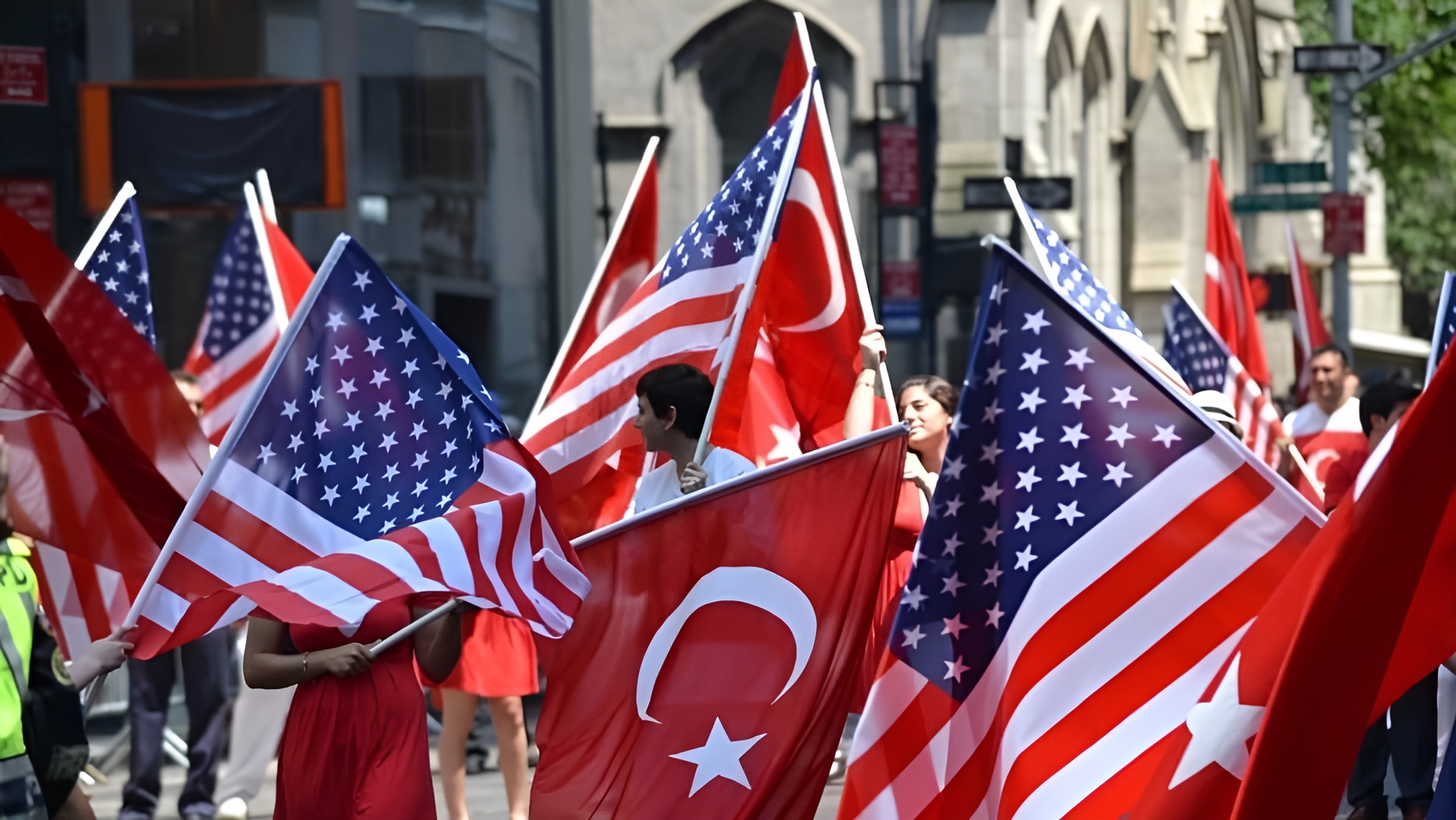
Every April 24th, while waiting to see “if the US President will say Armenian Genocide,” while listening to Senator Menendez’s outbursts with every F-16 sale, whenever Armenian and Greek lobbies join forces, a common question rises in our minds: Where is the Turkish diaspora? Why aren’t they doing anything?
There isn’t a single answer to this question, but when thinking about this issue, we must be honest and not only point the needle at others but also turn the awl upon ourselves. The mutual missteps—or inaction—of both the Turkish state and the Turkish diaspora have brought the situation to its current state over the years.
THE TURKISH DIASPORA AS A HISTORICAL EXAMPLE
The word “diaspora,” of Greek origin, means “to spread/scatter” in our language. This concept, historically used primarily for Jews, is now used for communities that have voluntarily or involuntarily left their homeland for various reasons.
There are many reasons for the formation of diasporas: natural disasters, war, exile… But as we approach modern times, the reasons for migration are no longer just matters of life and death, but now include economic conditions, better educational opportunities, better job prospects, and so on. Consequently, the definition of diaspora has expanded.
As globalization increased, so did migrations. Today, almost every community has its own diaspora. Some have dense populations and/or influence, others do not.
The history of the Turkish diaspora is certainly not as old as the Jewish diaspora, but it has a considerable past. First of all, despite the regular massacres and deportations targeting Turks by countries in the Balkan region after the loss of Balkan territories, there is a significant Turkish population that formed a diaspora by not migrating from these lands.
Turkish migrations to the United States began around 1860-1870. Some sources even point to earlier dates. It is known that the Ottoman Empire generally experienced emigration from Anatolia, Syria, and Lebanon regions, and the majority of these were Christian minorities. Of course, the empire, far from supporting this migration, struggled to prevent it but was not very successful. If we set aside Christian communities like Greeks and Armenians, it can be seen that Turks predominantly went to industrial cities such as New York, Detroit, and Pittsburgh to work in factories. There are memories that communities migrating from the Ottoman Empire initially lived in interaction, and even Turks and Armenians used Greek coffeehouses.
Apart from these, there are Turkish diasporas in France and Germany that we all know about. Especially the large labor migration to Germany has created a massive Turkish diaspora there.
On the other hand, we’ve only recently been hearing the concept of the Turkish diaspora in recent years. Because there is a meaningless allergy to the word diaspora in Turkey. The use of the diaspora definition for Turks living abroad is so avoided that even definitions like “Overseas Turks” have begun to be created for these Turkish communities lately. Of course, while it is obvious that the primary reason for this allergy is probably the “Armenian diaspora” phrase that the public is accustomed to hearing frequently, this reason cannot hide the irrationality in not using the definition of diaspora.
THE TURKISH DIASPORA AS AN EXAMPLE OF POLICY ABSENCE
Actually, it’s not possible to say that the Turkish state is unaware of diaspora policies. The Küçük Kaynarca Treaty, signed between the Ottoman Empire and Tsarist Russia, included a clause stating that the Crimean Khanate, which had separated from the Ottoman Empire, would remain religiously bound to the Caliph. This was a step taken by the Capital to maintain its connection with the population outside its borders. Considering that the Caliphate was a political title beyond being religious, the ambiguity of this clause strengthened the hand of Ottoman diplomacy, allowing Istanbul to somewhat influence St. Petersburg’s policies by putting forward Russian Muslims, just as the Russians interfered in the Ottoman Empire’s internal affairs using Ottoman Orthodox as an excuse.
However, it can be said that Turkish history’s diaspora diplomacy largely ended with this. Neither the Ottoman Empire nor the Republic of Turkey followed a tangible policy for their diaspora, especially across the ocean, while the image damage created by the Greek and Armenian diasporas spreading to the Western world, particularly the United States, and their ability to influence foreign policies by creating anti-Turkey public opinion has strengthened over the years.
In this respect, the state’s abandonment of the Turkish diaspora has caused other migrations that have taken place since the 70s to turn against Turkey. Members of leftist organizations fleeing the state took refuge in Europe; similarly, the migration of the Kurdish population later resulted in the formation of a diaspora in favor of the PKK; and the Syriac population, which had its first mass migration in the 70s after 1915-1923, was also organized against Turkey under the influence of the Armenian diaspora.
On the other hand, Turkey only started the Blue Card application in 1995, which largely restored the rights of the Turkish diaspora who had lost their rights in Turkey by renouncing Turkish citizenship due to European countries that did not allow dual citizenship, and completed its legal arrangements between 2012-2015. The establishment of a special institution by Turkey for the Turkish diaspora only took place in 2010 with the establishment of the Presidency for Turks Abroad and Related Communities. The “US-Canada Diaspora Advocacy Academy” program for the Turkish diaspora in the US and Canada, against diaspora lobbies that have caused many anti-Turkey policies especially in the US, was only opened by the Presidency for Turks Abroad and Related Communities in 2022. Just this picture alone shows us that Turkey is 50-100 years behind in diaspora policies!
This opening that started in 2010 was interrupted when the then Foreign Minister Ahmet Davutoğlu set the priority as the Balkans and the Middle East. Davutoğlu’s foreign policy, which carried out intensive public diplomacy especially in the Middle East and Africa regions, also turned the focus of institutions such as TİKA and YTB to this region, thus the years when Turkey’s hand was strong could not be adequately utilized.
THE TURKISH DIASPORA AS AN EXAMPLE OF NON-COMPETITIVENESS
Of course, the problem is not just in state policy. Turks have also been inadequate in organizing themselves in the places they went and have not been able to create a dominant effect in public opinion. Although the Turkish diaspora tried to form public opinion both in Europe and the USA during the First World War and the National Struggle, it could not show sufficient success in this regard. In fact, a Turkish organization in the USA could only be established 70 years after the start of migration, with the establishment of the Ottoman Mutual Aid Society in 1921. Although there are approximately 300 Turkish associations of various sizes in the USA today, three tent institutions stand out: the Federation of Turkish American Associations founded in 1956, the Assembly of Turkish American Associations founded in 1979, and the Turkish American Steering Committee founded in 2016. Still, these 300 associations fail to break the effects of the Armenian and Greek diaspora lobbies. Moreover, their effects are so limited that the Turkish state and the Turkish-American community were able to start lobbying activities to form public opinion in the US on the Cyprus issue only in the 70s, with the encouragement of their friends in the US.
Today, more than 6 million Turks live outside the country. About 300,000 Turks live in the USA, and this number increases even more with Turkish students going abroad. While the Armenian diaspora in the USA is 460,000 people, the Greek diaspora includes approximately 3 million people. Perhaps the failure of the Turkish diaspora in the USA could be excused because of this overwhelming size of the Greek diaspora and its joint work with the Armenian diaspora, but the picture is not always consistent with the numbers. Indeed, the country where the Turkish diaspora is most concentrated is Germany with 3.5 million Turks. The Armenian population in Germany is only 80,000. The size of the Greek diaspora is around 450,000. Despite this numerical superiority, the Turkish diaspora falls far short in shaping Germany’s policies towards Turkey, Armenia, and Greece. France follows Germany in terms of the size of the Turkish diaspora with 700,000 Turks. The Armenian diaspora in France, famous for its advocacy of Armenians, is 600,000 people. The Greek diaspora in France includes approximately 80,000 Greek citizens.
In short, Turks generally remain much less effective despite not being smaller than the diasporas they face.
THE TURKISH DIASPORA AS AN EXAMPLE OF LACK OF ORGANIZATION
The saying attributed to be a Chinese proverb that describes the Turks’ ability to organize, “When two Turks come together, they establish a state,” although it has proven itself once again recently in forest fires and earthquake disasters, where society organized itself in places where state facilities could not reach, we cannot see the same success in the diaspora issue. Perhaps the fact that we did not become a stateless nation after the successful conclusion of the War of Independence could be an excuse for this lack of organization, but rival diasporas, the Armenian and Greek diasporas, are not stateless either. So what is the reason for this lack of organization?
It should be noted that one of the primary reasons for the failures of the Turkish diaspora today is the division of the diaspora. From Europe to the USA, the domestic government-opposition division in Turkey is directly reflected in the diaspora. This situation actually leads to the existence of two Turkish diasporas: a group that receives the support of the ruling party and another group close to the opposition wing. While these two half-diasporas refuse to work together, a third group that emerges – the FETÖ diaspora – creates a threat as big as the Greek and Armenian diasporas, putting more pressure on the already fragmented Turkish diaspora. Moreover, the inadequacy of the AKP government’s policies in embracing the diaspora has also cemented this division.
Today, in this diaspora close to the opposition, not only is there distrust observed towards state institutions such as embassies, consulates, and YTB, but especially in recent years, Turks going abroad do not even show a tendency to engage in activities in favor of Turkey. Moreover, there is an increasing trend among Turks to settle abroad. Qualified workforce migrates to Europe and the USA in increasingly higher numbers each year.
In the end, as we said at the beginning, we need to be honest. It is not possible for Turkey to solve this diaspora issue as long as we point the needle at ourselves and the awl at others. The mutual negligence of both the Turkish state and the Turkish diaspora has brought the situation to its current state over the years. The result; a diaspora policy that has not become rooted, is very young, or even non-existent, and a diaspora that is extremely far from being able to organize.
AND THE TURKISH DIASPORA AS AN EXAMPLE OF A SOLUTION
This situation, which is currently a brain drain for us, can actually be turned into an advantage. It is of great importance for the country’s image that qualified people represent Turkey. In recent years, Uğur Şahin and Özlem Türeci’s BioNTech COVID-19 vaccine or Aziz Sancar’s Nobel Prize are examples of this. On the other hand, we cannot say that representation alone creates lobbying power. However, the ability of this qualified workforce to create capital will be vital for lobbying activities.
Although capital is a major factor in any case, one of the biggest powers of a diaspora is the block vote. However, for the diaspora to be able to make certain demands from certain politicians by voting as a block, this division must end. Unfortunately, this situation does not seem very likely in the short term.
Another thing that should be noted here is that the division of the Turkish diaspora is a deep ontological issue and the discussion of this would go in completely different directions. The social division, the foundations of which were laid during the Tanzimat Period, still shows itself strongly today, even if it takes different forms. However, in Israel, which experiences a similar situation, the Jewish diaspora is largely in one piece. For this reason, Israel and the Jewish lobby constitute an important example for policies to keep together the diaspora of a divided society.
Finally, a short-term way out for the Turkish diaspora will be to cooperate with other diasporas. The lobbying power of the Jewish diaspora was working in favor of Turkey until the Mavi Marmara attack in 2010 when relations between the two countries soured. However, the now isolated Turkish diaspora can somewhat close this gap by working jointly with the diasporas of Azerbaijan and other Turkic states. Moreover, such a sharp division as seen in the Turkish diaspora is not observed in the diasporas of these countries. Moves in this direction, especially with the momentum created by the Organization of Turkic States, will strengthen the hand not only of Turkey but also of other Turkic states. Additionally, the “related communities” mentioned in the name of YTB is a sign that this support can receive the support of not only other Turkish diasporas but also wider audiences. The combined power of a group of diasporas that cooperate by mutually looking after each other’s interests can save the Turkish diaspora from the dilemma it is currently in.