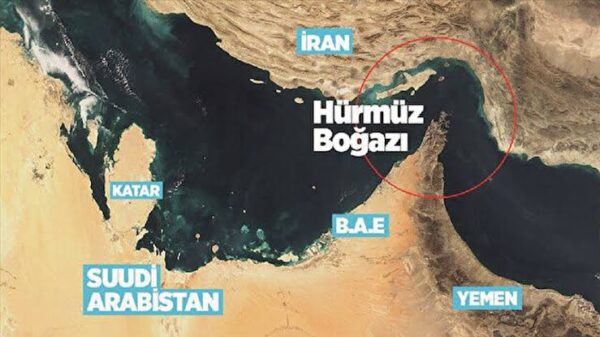
With Hamas’s surprise attack on Israeli territory on October 7, 2023, the Palestinian issue has once again become a global focal point. The war that Israel continues to wage in Gaza, despite all international efforts, has partially spread to the West Bank, Lebanon, Syria, and Iraq. In response to limited attacks on Israel from Yemen and Iran, Israel’s military retaliation in kind has ignited the fuse of a potential regional war.
After Israel forcibly evacuated Jewish settlers from Gaza in 2005, Hamas, the anti-reconciliation political actor in Palestinian politics who took control of Gaza shortly after, organized the region like a base for a prolonged war against Israel. Hamas, with its limited resources, attacked Israel whenever possible, gaining legitimacy in public opinion through its attacks on Israel, while Israel’s disproportionate counterattacks on Gaza served to radicalize the local population.
While the continuity of this chronic problem in the region has become a driving force for the survival of the Iranian and Syrian regimes, it has also become the “imminent danger” that right-wing politics in Israel resorts to when in difficult situations.
When addressing the Palestinian issue, while one-state or two-state solutions are always discussed at the table, the real problem is overlooked. The primary issue of who will represent the parties to a possible solution stands out, while the issue of territory and sovereignty becomes secondary.
There are currently two political authorities in Palestine. On one side is Hamas, which received the highest votes in the 2006 general elections but couldn’t take power across all of Palestine, and on the other side is Fatah, which has international legitimacy but is not considered legitimate by the people. Although the international community accepts Fatah and its leader Mahmoud Abbas as an interlocutor, current surveys reveal that Palestinians don’t believe Mahmoud Abbas represents them. On the other hand, Hamas’s regular state of war with Israel gives it legitimacy and popularity among Palestinians.
However, while a Fatah administration that is not supported by the people but recognized on paper by the international community is insufficient to solve the Palestinian problem, Hamas, which has relatively popular support, is far from being a realistic solution partner as it acts within the framework of “conquering all of Israel.” Due to Fatah’s Marxist background, legitimacy debates among the people, and passive attitudes, it cannot garner the international support that the Palestinian people expect.
Israel takes advantage of this representation crisis to maximize its territories by any means necessary. For post-war Gaza, Israel is prioritizing radical solutions such as re-settling Jewish settlers and completely exiling the population.
In contrast, in America, as a simple psychological cause-and-effect relationship, children of pro-Israel parents express their reaction to their parents through pro-Palestinian stance, and in Europe, the left wall intended to be built against the rise of the right expresses itself with Palestinian sympathy. The political wind generated by pro-Palestinian activism, which has widespread popular support in the West, could be hope for solving Palestinians’ problems.
However, this first requires resolving the representation crisis in Palestine. For the solution of the problem, a new political will must emerge from within the Palestinian people, consisting of a group that has good relations with the West, stays away from terrorism, and has popular support from the people. It should not be forgotten that the Palestinian people have become radicalized within the spiral of violence that has been going on for years and, moving away from realistic thinking, support Hamas’s actions with a vengeful impulse without thinking about what will happen to them tomorrow. This shows that Hamas, which is actually a product of sociology, could re-emerge tomorrow under different names even if it disappears today.
In this case, the question of what needs to be done comes to the fore. Above all, under the military and political supervision of a consortium consisting of neutral countries, a ceasefire needs to be established in Palestinian territories, followed by the construction of institutions and the building of a new process with healthy actors. Of course, this scenario requires the presence of Western powers that have come together with a determined political will rather than being a utopia.